Augmentative and Alternative Communication - AAC
Understanding AAC & How You Can Help
AAC stands for Augmentative and Alternative Communication.
AAC is any tool or method that helps a person communicate when speech alone isn’t enough. This can include communication boards, picture symbols, gestures, sign language, written words, or speech-generating devices.
AAC allows people to communicate their wants, needs, feelings, choices, ideas, and opinions.
Some people use AAC all the time, while others may use it only in certain situations.
Most importantly, AAC is communication. It does not mean a person doesn’t understand you, and it should never be viewed as a lesser form of communication.
Types of AAC
AAC includes the many ways people communicate when speech alone doesn’t meet their communication needs.
AAC can include:
- Communication boards
- Picture symbols
- Writing & Letter boards
- Speech-generating devices
- Tablets and communication apps
- And many other communication methods
Some people use AAC all the time. Others may use it only in certain situations or when they are unable to communicate effectively through speech.
AAC looks different for every person.
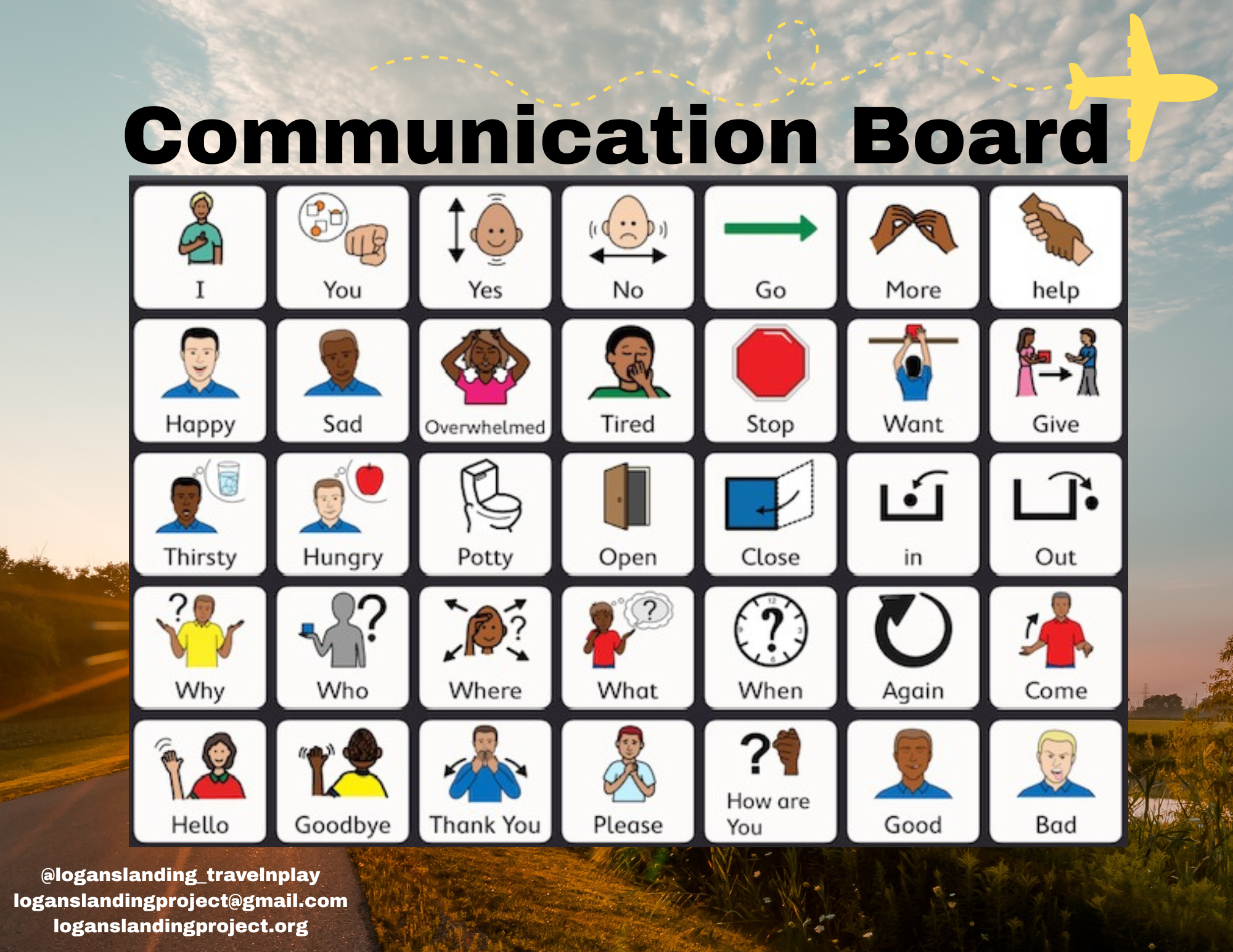
How Do I Use This Communication Board?
You don’t have to know everything on the board.
You don’t have to use it perfectly.
Just start.
1. Get the person’s attention—but don’t demand it.
You can say:
“Hi! The communication board is right here if you want to use it.”
Give the person time to respond.
2. Talk normally.
Don’t assume that because someone uses AAC, they don’t understand what you’re saying.
Use age-appropriate language and speak directly to the person.
Talk to them—not about them.
3. Model how to use the board.
One of the easiest ways to help someone learn AAC is to use it yourself.
If you say:
“Do you want to play?”
you can point to PLAY on the board.
If you say:
“It’s hot today!”
you might point to HOT.
You are showing the person that the board is a way to communicate.
4. Give them time.
This is one of the most important things you can do.
Wait.
Processing information, deciding what to say, and physically reaching or pointing to a symbol can take time.
Try not to immediately repeat your question or answer for the person.
A few extra seconds can make a huge difference.
5. Follow their lead.
If the person points to something, looks toward something, gestures, vocalizes, or uses their AAC device, pay attention.
Their communication may not always look like what you’re expecting.
Communication can happen in many different ways.
6. Accept all communication.
Communication isn’t limited to spoken words.
A person may communicate by:
Pointing
Looking
Reaching
Gesturing
Signing
Using pictures
Using an AAC device
This is general educational information and that AAC systems should be individualized with the person’s family and qualified speech-language professionals when appropriate.
Bring AAC to Your Community
Communication boards are currently being placed in parks, playgrounds, recreation areas, sports venues, and other community spaces throughout the Mahoning Valley and surrounding communities. If you would like to explore having a communication board at your location, contact Logan’s Landing Project.
We can help you learn more about the boards, the process, and how we can work together to make your space more inclusive.
📍 Where Are Our Boards?
- Imagination Station, Bazetta Ohio
- Perkins Park, Warren Ohio
- Packard Park, Warren Ohio
- Howland Park, Howland Ohio
(And 9 others are currently funded and in production!)
Local Inclusive Play & Sensory-Friendly Locations
Playgrounds:
Imagination Station, Bazetta, Ohio
Perkins Park, Waren Ohio
Sebastian’s Playground Solon, Ohio
Sensory-friendly movies:
Regal Cinemas South Youngstown, Ohio
Other Entertainment:
Mahoning Valley Scrappers Niles, Ohio
This is general educational information and that AAC systems should be individualized with the person’s family and qualified speech-language professionals when appropriate.
Travel Tips & Planning Tools
Packing checklists for sensory needs
Air Travel Packing Checklist
Road Trip Packing Checklist
Travel prep guides
Travel Prep Guide for Families with Sensory Needs
Airport navigation tips
TSA Cares
Checklist for Air Travel
Autism Travel Professionals
Breanne Varela Travel Professional – Certified Sensory Friendly Agent by Logan’s Landing Project
Autism Travel
Autism on the Seas
Disney – Accessibility Services for Guests with Disabilities
Free Printable Tools
